Tag: Mobile

  • The 5 Ways to Maximize Your Marketing Amidst Customers’ Privacy Concerns

    Digital marketing is not the shiny new object it was a decade ago, but is still a crucial piece of any business’ tool kit. Privacy concerns from users have pushed tech giants like Meta, Google, Apple and others to adopt stricter security features, making it more difficult for user activity to be tracked online thus providing a conundrum for marketers.

    That is great news for the consumer who is wary of one too many oddly specific and prescient ad placements. It’s not as welcome news for marketing professionals who have poured millions of dollars into digital because of how granular they could get with ad targeting and the detailed reporting that followed.

    Apple introduced App Tracking Transparency in 2021, an explicit opt out option presented to iPhone users regarding in-app activity tracking, which threw a wrench into many marketer’s digital strategies because it fundamentally altered how campaigns on platforms like Facebook and Instagram were run. Facebook itself has claimed the iOS privacy change will cost them $10 Billion in 2022 alone.  

    Just a few years ago a marketer could target a hundred people on Facebook and track 10 definitive conversions from that original audience. Over time Facebook increased the minimum size of a custom audience that one could create with externally uploaded information (i.e. email lists) due to data scraping concerns. The nexus event of these privacy concerns originate from the disaster that was Cambridge Analytica

    News stories like that, the trend of social media algorithms favoring sensational and engaging content above all else, and even Congressional hearings, have led to public pushback, putting tech giants on their heels forcing them to adapt. 

    Marketers, as is their nature, were forced to do the same.  

    So now with the privacy and security concerns of users leading to changes made by the platforms in response, the easy days are a thing of the past. 

    That doesn’t mean that digital marketing is any less effective though. It just means every business needs to go beyond just the numbers of what the CPA is on this creative targeting that audience vs another. 

    Here are the Top 5 Ways to Maximize Your Marketing Amidst Customers’ Privacy Concerns

    1.) Influencer Marketing 

    The effectiveness of Influencer Marketing lies in the ability to partner with a personality that consumers already trust and admire. Partnering with creators allows a brand to go beyond direct marketing and provides a warm referral. Facebook has recently doubled down on Influencer Marketing with a full Creator Marketplace for marketers to find and work with top talent.

    It’s not just a buzzword marketing tactic either, the numbers back it up

    “Research from Meta for Business in 2020 found that 84% of global consumers say they would purchase, try or recommend a product based on influencer content if it is relevant.

    Influencer marketing is especially powerful in driving sales when paired with other ads. Facebook and Instagram campaigns that combined regular ads and influencer ads are 85%3 more likely to drive people to add products to shopping carts, compared with using regular ads alone, according to 2021 Meta for Business research…For brands, the most effective influencers to partner with are those seen as authentic, trustworthy and relatable by their audiences. In fact, 60% of global consumers say they’d follow a brand, product or service after seeing it promoted by a creator who shares their values and interests.

    2.) Put a Face to Your Brand

    It’s incredibly rare for a brand to build sustainable success through advertising alone. It takes branding and marketing to drive awareness and make people familiar with what a business is offering. Putting a face to your brand helps create a connection, build a community and a sense of trust, but most importantly it arouses emotion.

    “Emotions drive people to action. They make us laugh, shout, and cry, and they make us talk, share, and buy.” – Contagious: Why Things Catch On

    3.) You Have to Give Before You Can Ask

    In the era of privacy concerns online, trust takes time to build between brand and consumer. It’s important to understand that you can’t always be looking to sell, especially not in the first interaction with a user. Provide content that’s meaningful, educational, informative, and entertaining. Connect with your target audience and build a tribe of users that want to be associated with your brand. Provide more than you ask for so when you do go for the ask, users are ready, willing, and able.

    4.) Differentiate Your Content

    Too many brands create one piece of content and then share the same exact thing on Facebook, Instagram, Twitter, LinkedIn etc. It isn’t just a recommendation anymore, it is vital to differentiate your content. 

    Give people a reason to follow and engage with you on different platforms or you run the risk of siloing your audiences. Create native content for each platform in order to reach the user where they are, but more importantly reach them with content that speaks to the behavior of the specific platform.

    5.) Become More Than Transactional. 

    Provide value beyond just the product you hope to sell if you want to build a lasting relationship with customers. For a brick and mortar business that might mean selling coffee in the morning to reach customers at different times of the day while eliciting different behaviors. 

    Another example of becoming more than transactional is the renowned customer service of e-commerce pet retailer Chewy. With big box stores, Amazon, and local pet stores it’s difficult to cut through the white noise when many customers are just comparing prices. Chewy became more than transactional with its personal touch in customer service.

    With articles appearing on the likes of Fortune and the Today Show, the customer service interactions of Chewy include not just refunds, but handwritten notes and even flowers delivered to customer’s doors.

    Customers will remember you and more importantly talk about you if the relationship becomes more than a transaction.

  • Facebook Takes a Page Out of Snapchat’s Playbook (Again) With Ray-Ban Stories

    Timing is everything in marketing. Take QR Codes for example, which have literally been around for decades. When mobile devices and social media first started to really take off there was a push, mainly from marketers, to drive adoption of QR codes. The problem though was that at the time users still needed a separate QR Code Reader app and as we all know any additional friction for the consumer is often a death knell. Years later Apple integrated the ability to read QR Codes right into the iPhone camera, which made everything more seamless. But it wasn’t until the Covid pandemic that QR Codes finally took off and maximized their potential. Why? With people looking for more contactless options while out to eat, QR Code menus were the perfect coupling of timing and necessity.

    I provide that diatribe to hammer home the fact that Augmented Reality glasses are far from a new idea, but Facebook (and Ray-Ban) are hoping to run where Google Glass fell.

    Snapchat seemed primed to take the AR sunglasses baton years ago with the release of Spectacles back in 2016, but they never gained mainstream popularity despite a fever dream of a guerrilla marketing campaign that involved vending machines randomly popping up across the country.

    Old heads like me who bought the original Snapchat Spectacles are looking at the new Facebook Ray-Ban Stories like Miranda Hillard in Mrs. Doubtfire.

    Facebook is no stranger to borrowing ideas from its competitors (see: Instagram Stories) so the social media giant is hoping to build upon the missteps of Snap in its latest venture. Snap Spectacles were nearly impossible to buy for months after launch due to an intentional and artificial scarcity and it may have been turned off curious customers who swiftly moved onto the next thing. Credit to Facebook too for the smart decision to partner with legendary sunglasses brand Ray-Ban to design something that people will actually want to wear beyond just the techies.

    Time will be the ultimate judge here, but Facebook isn’t merely dipping its toes into the AR and VR market, rather its dove headfirst into the space with a huge bet on the metaverse. So with enough clout, marketing savvy, and some good timing Facebook could be the ones to finally bring AR glasses mainstream.

  • Google Specialist Challenge Completed

    redgooglespecialist

    Google threw down the gauntlet recently with its Specialist Challenge to earn the certifications for Advertising Fundamentals, Search, Remarketing, Video, Mobile and Shopping.

  • Pokemon Go: Has the Excitement Over Augmented Reality Been Premature?

    After being in the market for a few weeks now, soaring to unheard of levels in popularity, as well as revenue ($200M and counting), Pokemon Go has cemented itself as a cultural phenomenon. For now.

    IMG_3804
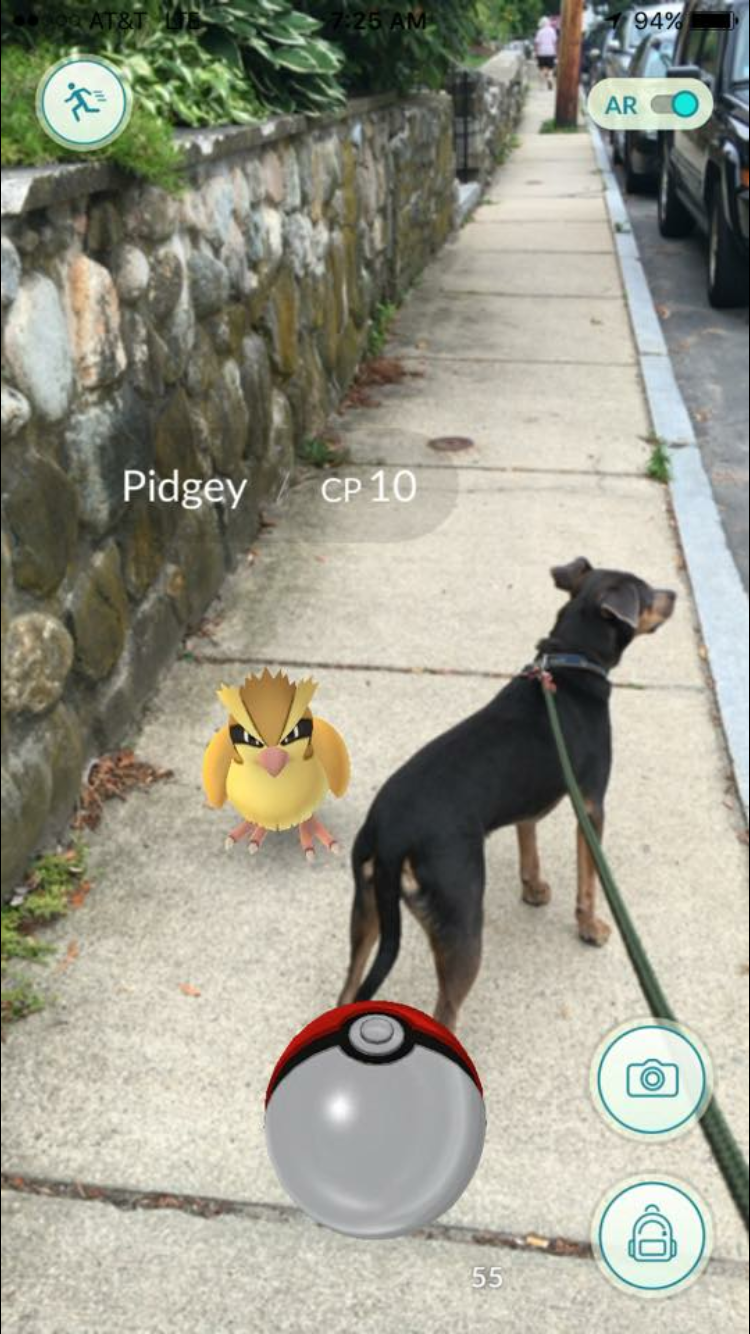
    One of the biggest features of the game and something both the tech and marketing industries are salivating over is Augmented Reality (AR). With AR, users can find and capture Pokemon on their phone’s camera so it integrates the digital world with the real world; essentially the bridge to the all encompassing Virtual Reality.
    As the marketing and tech worlds clamor over how to take advantage of, and monetize, the sudden massive popularity of AR, there’s just one question that people seem to be missing. How many people are actually using the AR function in Pokemon Go?
    IMG_3627
    While the AR is an intriguing feature, the more people you see playing the game, the more you realize just how many people have turned the feature off. For one, it makes the game easier to play and in some cases safer (for users that play on a bike or even while driving).
    IMG_3576
    Albeit a small sample size, I polled users on Twitter and Reddit and more than 80% of respondents answered that they never use AR in Pokemon Go. So has the AR excitement been premature or is the new wave of AR Marketing coming sooner than we all expect?

    It might be a bit longer, or perhaps even just take minor game enhancements, to get more people on board with the AR and thus open the floodgates for marketers. I’ve heard users complain about the AR making the camera too shaky or even causing the Niantic app to crash more frequently. In the meantime though, marketers can and should expect to take advantage of the massive popularity of the game. With more active daily users than Twitter, it’s clear the attention is there so now it’s just a matter of capitalizing on that attention without alienating users. Companies like McDonalds are getting into the game earlier than most with sponsored Pokestops. You’ll soon be seeing McDonald’s locations that are like Lure’s and Incense on steroids and perhaps even feature exclusive content.

    The number one goal of a brick and mortar business is to drive foot traffic and nothing does that better than a massively popular mobile app that legitimately forces people to walk around.

    IMG_3805
    Google (who partners with app creator Niantic) has been pretty tight lipped about how marketers can get involved up to this point. So unless you’re one of those massive brands, you’ll need to rely on “old school” marketing like manually dropping Lures if you happen to be lucky enough to have a Pokestop near your business. Plenty of businesses have jumped on that opportunity already. I’ve seen it at a bar, an ice cream shop and even a hotel offering a discount on your meal. Whether AR is ready to make the jump to mainstream or not isn’t clear just yet, but what is apparent is the huge opportunity Pokemon Go presents for marketers everywhere.
  • Facebook Video Updates Include Split Screen; Could Be a Boon for Advertisers

    A new update to Video Ads on Facebook could be a boon for advertisers. The more and more content, ads, options that get pushed out there the less and less time and attention your stuff will get. Opportunity is constantly shrinking so it’s up to the advertiser to find new and different ways to engage the customer. We’re day trading in attention here so the key is to find out what will grab a user and what will keep them the longest because that’s going to give you the best opportunity to drive a conversion and make a sale.

    This new update to Facebook Video will essentially allow users to watch a video and click through to view your website without waiting until the video ends or having to leave Facebook at all. It opens up a split screen option so users can view your website while still watching the video in their browser, uninterrupted.

    I’m predicting this will have a huge positive effect on the percentage of videos viewed. People don’t have to interrupt what their doing or wait any extra time to learn more, they can watch the entire video all while multi-tasking on the brand’s website to find what they need quickly. Keep in mind this is only for clicking on a video link ad on iOS. Facebook is also saying that “In early testing, advertisers have seen a significant decrease in cost per click and cost per conversion.” So initial results are looking good at least.

    The same experience goes for Mobile App Install Ads, rather than waiting for the video to end and/or sending a user to a separate experience, they will be able to watch the video in split screen while (on iPhone only) opening up the App Store to download the app, all while still watching the video simultaneously. Efficiency at its finest.

    Full release from Facebook below:

    Updates to Video Link Ads and Mobile App Install Ads

    We recently launched a new experience for video link ads in the website click and website conversion objectives that creates a more engaging experience for people when completing lower-funnel objectives. When people click on a video link ad on iOS, they can now browse your business’ website while watching the video from the ad, uninterrupted. People no longer have to stop a video mid-way or wait for the video to end to visit your website. In early testing, advertisers have seen a significant decrease in cost per click and cost per conversion.

    Additionally, we have made improvements to the video experience for mobile app ads. In the past, when people tapped on your video mobile app install ad, the video would play in full screen. To improve the experience both for people and our advertisers, we have updated this design. Now on iPhone only, when people tap on your mobile app ad with video creative, they will be taken to the Apple App Store with your video creative still playing in a split screen.

  • Facebook is Changing the Game with New Messenger Updates

    facebook-messenger
    Facebook made some big announcements today during it’s Messenger webinar, which introduced some new features as well as hinting at potential functionalities coming down the line.

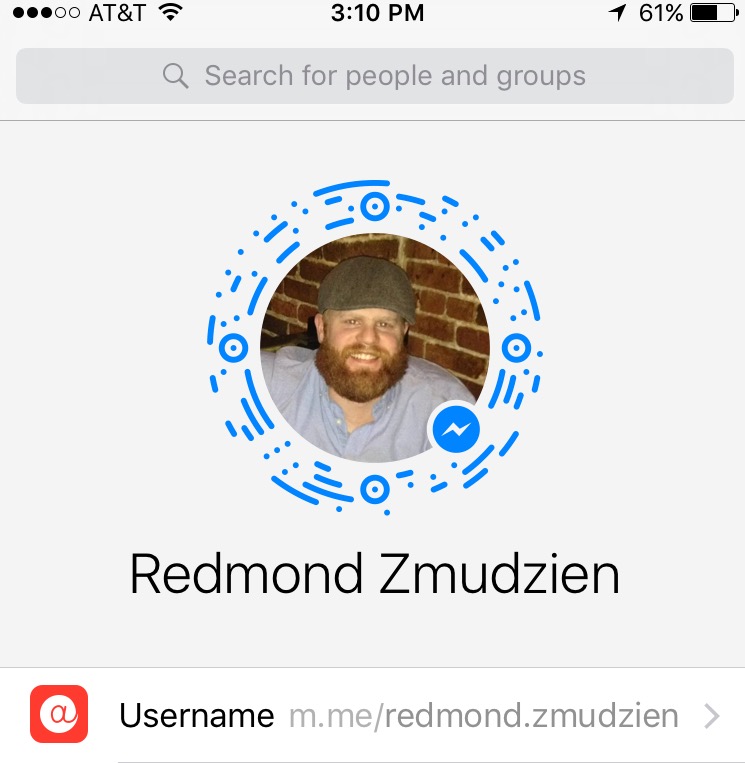
    Messenger Codes were announced and my first reaction was “QR Codes are BACK!” These are custom images unique to each Facebook business (and personal) page that, when scanned in the Messenger app will automatically open up a private message with the business page. This is a huge opportunity for engagement and customer service! Imagine the Messenger Code on the side of product packages? Get a package in the mail, but something’s not the right size? Scan the code that’s slapped on the side of the box and start having a conversation with return instructions from the business page directly in seconds. Messenger Codes may finally achieve what QR Codes so valiantly attempted in the past. These are available for download in your page’s message inbox now.

    FullSizeRender (5)

    Then there is also the recently introduced Messenger Links that use a page’s username to create a short link (think Bit.ly) that when clicked, automatically opens a private message within Messenger with the business. Try it out with your business, brand or personal page. The universal format is: m.me/PageName to get your own username.

    You can also encourage conversations by being quick to respond as a corresponding badge will appear on your page while helping establish response time guidelines. You may have seen these badges popping up on more and more Facebook pages recently. The requirements consist of responding to 90% of messages within 15 minutes to receive the badge and meet the threshold of “Very Responsive.” Just remember that this threshold is only for the previous 7 day period, so if you have done this one week, but then don’t the next week, you will lose your badge.

    Screen shot 2016-05-26 at 12.37.47 PM

    You can also set an automatic greeting reply for when a user messages your page to set expectations and provide a link to some FAQ’s or anything else for people who start a conversation with you.

    Use the “Message” button to automatically open up a private conversation to respond to sensitive or private questions in a private message. This is a tool of unparalleled value for anyone who has ever been tasked with handling responding for a large company. Oftentimes best practices call for responding to a disgruntled customer in a private message so this helps take care of that, keeping the page drama free while also creating improved customer service.

    Screen shot 2016-05-26 at 12.40.24 PM

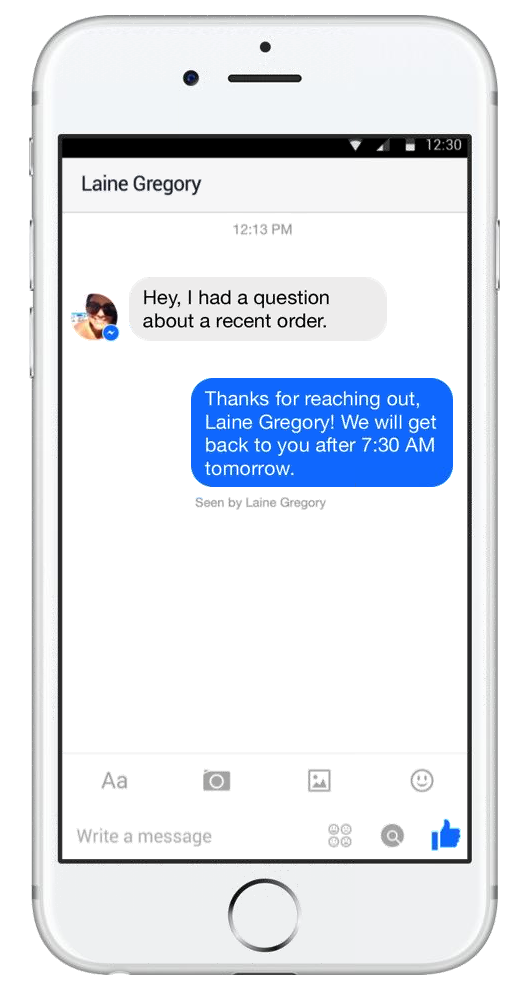
    You can also turn on Away Messages! Viva la AOL Instant Messenger! So if you’re away from the computer for a while or the business just won’t have anyone available to respond at certain hours just set this up and let your customers know exactly when you’ll get back to them. You can enable away messages even if you don’t have specific business hours too.

    Screen shot 2016-05-26 at 12.41.06 PM

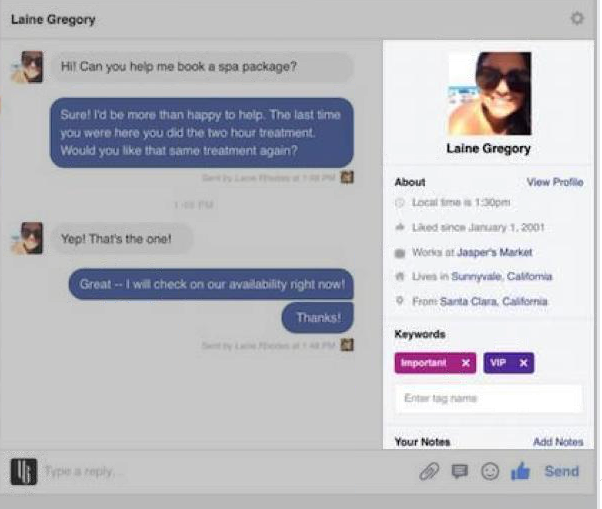
    Another cool feature are Context Cards within the message inbox, which are actually a snapshot, or a trading card if you will, of the person who messaged you. These Context Cards allow a business to get more personal info on users such as where they live, where they work etc. to provide a more personalized and custom message.

    Screen shot 2016-05-26 at 12.42.02 PM

    One thing to note for advertisers is that you can’t reach out to a customer unsolicited. So you can’t message a person who hasn’t reached out to you directly via messenger — yet. Facebook specifically said they will look into features like this in the future, but currently want to “empower customers to take the first step.” But once a person messages a page, then you can interact with them, send them special offers etc. all through Messenger.

    The best part is all of these new Facebook features are available globally right now!

  • Attack the Top of the Sales Funnel with Facebook Video

    attackthetopofthesalesfunnel

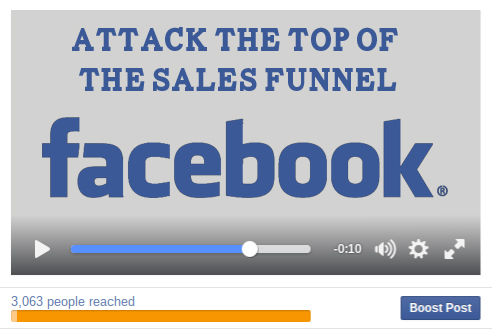
    Facebook rolls out new ad types all the time that allow advertisers to target users in unique ways or to reach different goals. Combining these various strategies into a few campaigns going through the longer sales funnel is one of the best ways to take advantage of all these ad types. This is what I like to call Attacking the Top of the Sales Funnel.

    Figure out who your key demo is for this campaign; who are you trying to hit? Is it men of a certain age in a certain radius? Moms with an interest in soccer? Whatever it is, set your targeting and run a Facebook video campaign.

    The beauty of Facebook video is you can sort out the users that are actually interested in your product based on who actually watched certain percentages of the video. Make sure to check off “Create audiences from people who view this video” under the designated Call To Action Button.

    Screen shot 2016-05-05 at 4.01.18 PM

    Doing this will allow Facebook to build a Custom Audience of users who have viewed your video. If your video gets 10,000 impressions, but only 5,000 users actually watch the video, then why would you want to waste ad spend on the 5,000 people that scrolled right past your content? Exactly, follow up with users who have already expressed an interest and given you their attention.

    Now it’s time to attack the top of the sales funnel. Using this Custom Audience you have created a perfect retargeting list to hit Facebook users with a follow up message or offer. This is particularly effective if the video is more of a brand awareness play and then retargeting users in the Custom Audience with a Carousel Ad with specific products/features.

    Finally, based on the results of your Carousel Ad determine which product or feature is getting the best engagement and most clicks from users? Then jump one level further down the funnel and closer to a conversion by serving up a specific offer or special to those users – based directly off which Carousel slide performed the best.

    Courtesy of Facebook for Business
    Courtesy of Facebook for Business

    This is a great tactic to increase efficiency of your ad spend. Rather than throwing videos, promo posts, website clicks ads etc. all out randomly and seeing what sticks, this allows you to methodically whittle down your audience size while also increasing the user attention, interest and the likelihood of ultimately making a purchase.

  • Lower the Barrier of Entry to Drive More Conversions

    Currently the average conversion on mobile takes 24 taps. This is why it is crucial to lower the barrier of entry to complete a conversion, whether that be an e-commerce purchase, a sign-up or a form fill. Making things simpler and quicker for your consumers will help improve conversion rates and total conversions. Whether it’s eliminating unnecessary steps in a shopping cart checkout process or enabling users to check out as guests, the easier the process is, the more likely consumers are to complete the desired action.

    If form fills to gather customer information is your goal, consider running a Facebook Lead Ad as it definitely lowers the barrier of entry. Rather than displaying an ad, requiring a click, sending a user to your website, waiting for it to load, manually filling out a form and then submitting it — a Lead Ad is a Two Tap process.

    Originally created as a quick way to optimize form fills for mobile users, these ads have a person click once on the ad, which will automatically fill various fields in the form based on information from their Facebook profile, and then a second click to approve and send this info to the advertiser. And with the ability to integrate these Lead Ads with CRM systems like Salesforce, this eliminates the need for a lengthy process and helps quickly grab the relevant information advertisers crave.

  • Micro Moments: Be Present, Be Personal, Be Persuasive

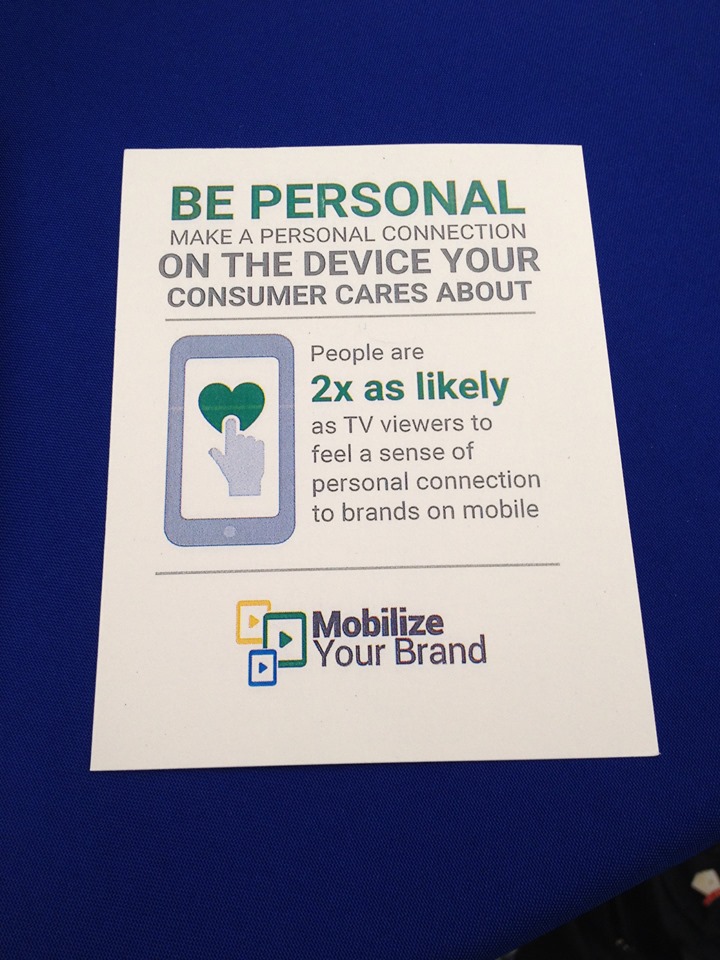
    “People are 2x as likely to feel a personal connection to brands on mobile.”

    Micro Moments  are changing the way users are searching, particularly in mobile. With the omnipresence of smartphones, users are able to search for anything when an impulse strikes, creating these “I Want to Learn, I Want to Find, I Want to Do, I Want to Buy” moments. Taking advantage of the omnipresence of mobile, users decide on the fly what they want to look up, research and purchase in the spur of the moment.

    These Micro Moments create a demand for relevance, which establishes a higher level of expectations.

    “When we act on our needs in-the-moment, our expectations are high and our patience is low. This makes the quality, relevance, and usefulness of marketing more important than ever.” – Think With Google

    google_mobile

    • Be Present, Be Personal, Be Persuasive
      • In mobile it’s all about serving the right message to the right person at the right time. Crafting a highly relevant message, that is present at the right time and optimized for the channel and device will win.
    • ⅓ of mobile usage occurs in the home so we aren’t necessarily targeting someone “on-the-go” which is why Cross Device Conversions become such a huge metric.
      • Cross Device Conversions help campaigns follow the users along the path to a conversion, regardless of where they started. If a user has a Micro Moment, performs a mobile search to learn more, but then converts later via desktop, without tracking Cross Device, we would not be able to properly attribute that.