Tag: Google

  • Pokemon Go: Has the Excitement Over Augmented Reality Been Premature?

    After being in the market for a few weeks now, soaring to unheard of levels in popularity, as well as revenue ($200M and counting), Pokemon Go has cemented itself as a cultural phenomenon. For now.

    IMG_3804
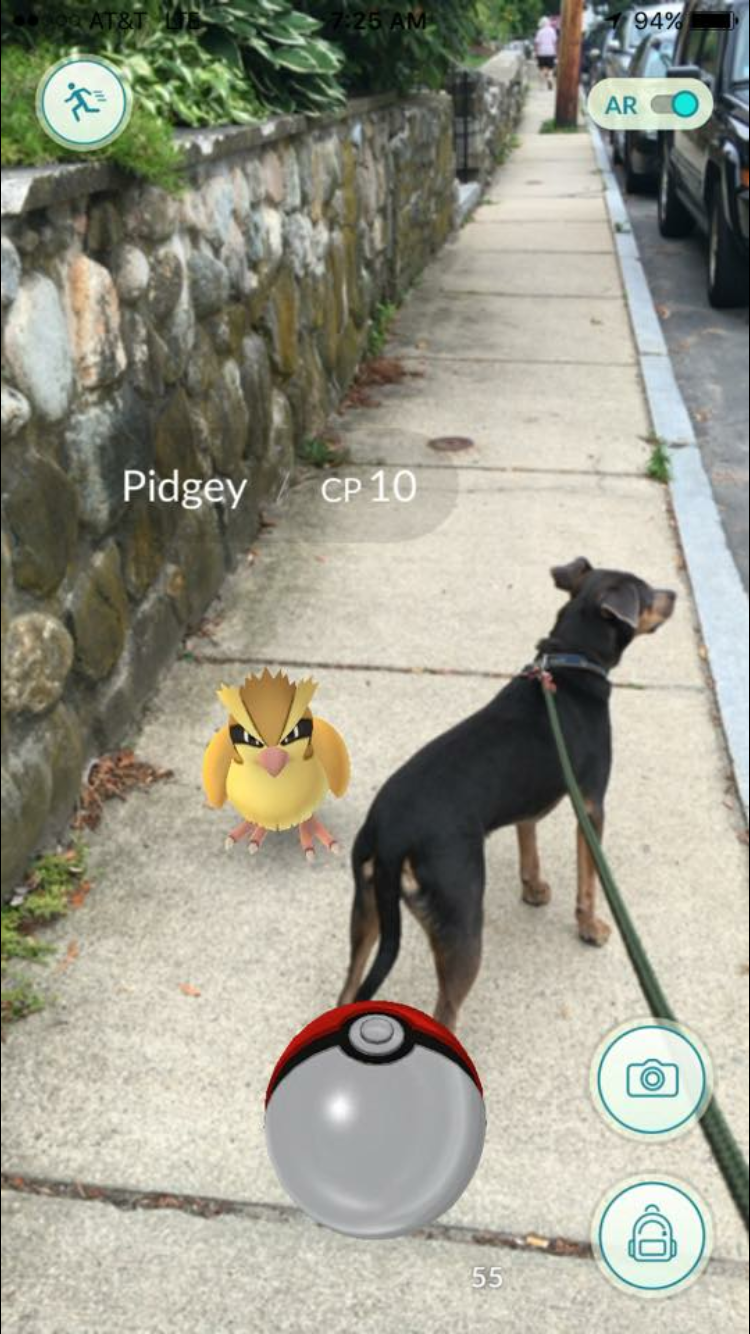
    One of the biggest features of the game and something both the tech and marketing industries are salivating over is Augmented Reality (AR). With AR, users can find and capture Pokemon on their phone’s camera so it integrates the digital world with the real world; essentially the bridge to the all encompassing Virtual Reality.
    As the marketing and tech worlds clamor over how to take advantage of, and monetize, the sudden massive popularity of AR, there’s just one question that people seem to be missing. How many people are actually using the AR function in Pokemon Go?
    IMG_3627
    While the AR is an intriguing feature, the more people you see playing the game, the more you realize just how many people have turned the feature off. For one, it makes the game easier to play and in some cases safer (for users that play on a bike or even while driving).
    IMG_3576
    Albeit a small sample size, I polled users on Twitter and Reddit and more than 80% of respondents answered that they never use AR in Pokemon Go. So has the AR excitement been premature or is the new wave of AR Marketing coming sooner than we all expect?

    It might be a bit longer, or perhaps even just take minor game enhancements, to get more people on board with the AR and thus open the floodgates for marketers. I’ve heard users complain about the AR making the camera too shaky or even causing the Niantic app to crash more frequently. In the meantime though, marketers can and should expect to take advantage of the massive popularity of the game. With more active daily users than Twitter, it’s clear the attention is there so now it’s just a matter of capitalizing on that attention without alienating users. Companies like McDonalds are getting into the game earlier than most with sponsored Pokestops. You’ll soon be seeing McDonald’s locations that are like Lure’s and Incense on steroids and perhaps even feature exclusive content.

    The number one goal of a brick and mortar business is to drive foot traffic and nothing does that better than a massively popular mobile app that legitimately forces people to walk around.

    IMG_3805
    Google (who partners with app creator Niantic) has been pretty tight lipped about how marketers can get involved up to this point. So unless you’re one of those massive brands, you’ll need to rely on “old school” marketing like manually dropping Lures if you happen to be lucky enough to have a Pokestop near your business. Plenty of businesses have jumped on that opportunity already. I’ve seen it at a bar, an ice cream shop and even a hotel offering a discount on your meal. Whether AR is ready to make the jump to mainstream or not isn’t clear just yet, but what is apparent is the huge opportunity Pokemon Go presents for marketers everywhere.
  • Ambiguity is the Enemy of Attribution: Facebook to Roll Out Store Visits Tracking

    FBStoreVisitsTracking
    We’re getting closer to closing the loop on digital marketing. Ambiguity is the enemy of attribution. Facebook just announced it will soon begin rolling out its own Store Visits tracking functionality for ad campaigns.

    Google started the trend when it launched a very similar program nearly two years ago to track Store Visits after a user saw or clicked a business’ ad. However, this is still something that requires a very large threshold of clicks and quite frankly geographical footprint. It’s not accurate enough yet for small business owners to take advantage of. It looks like Facebook may be identifying an opportunity to strike while the iron is hot.

    Ask any digital marketer working with a brick-and-mortar business what the biggest challenge is and they will tell you attribution. I hear it all the time from clients that understand they need to run digital and social campaigns and may even acknowledge they are performing well, but what does that really mean to them? Without any real data on how much foot traffic these campaigns are driving there will always be that question mark. Unless of course you have a client where you can tie in with their in-house Point-Of-Sales (POS) system to track purchases, but that’s not always available.

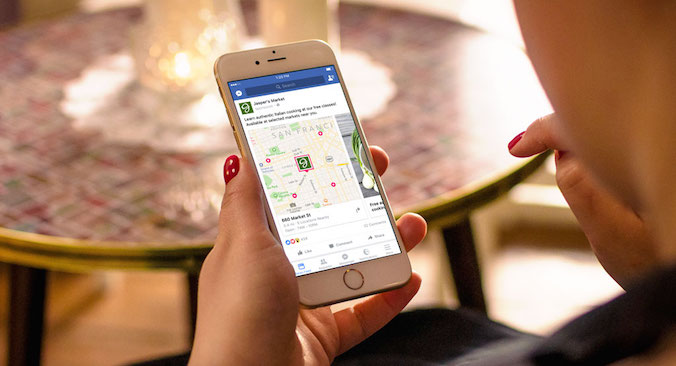
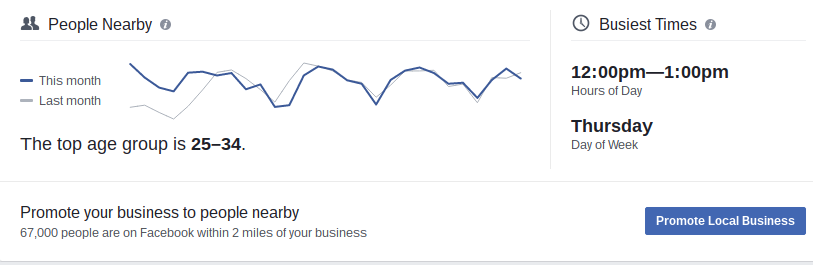
    So over the next few months Facebook will begin rolling out its own Store Visits tracking, which makes a ton of sense considering that its Local Awareness Ads are designed to drive this exact action. I think we saw the early glimpses of this with Local Insights, which can be found in your Facebook business page’s Insights and then under Local. An incredibly effective tool that can tell you loads of information about which kind of people your ads are reaching nearby your location, what their demographics are, what times are most popular etc. to help optimize your local ads. You can actually narrow the radius down to as tight as 165 feet around the location!

    Screenshot 2016-06-16 at 4.04.04 PM
    Screenshot 2016-06-16 at 4.03.56 PM
    The No. 1 biggest regret for Google in my opinion was the failure to launch of Google+. For any Store Visits tracking to work Google requires people to have their Location Tracking on their phone enabled, as does Facebook but so many more people allow it because as a social platform it provides that additional value (check-ins, local reviews etc.). If Google could have gotten G+ to take off like it hoped, combined with its treasure trove of data on user intent, they would have ran the world. So utilizing that location tracking information along with wi-fi signals, Facebook will be able to coordinate when a user sees or clicks and ad and goes within that business’ geo-fenced area.

    If you tell a client that his Local Awareness ad got 850 Clicks and drove 100 Calls he may say that’s great, but if you’re able to tell a client this campaign specifically drove 250 people directly into their store? Now that is valuable data.

    Facebook will also be rolling out the ability to connect Ads Reporting with a location’s POS system to track sales via the Offline Conversions API.

    “Advertisers now have a way to connect transactions that take place in store or over the phone to their ads. The Offline Conversions API allows businesses to match transaction data from their customer database or point-of-sale system to Ads Reporting, helping them better understand the effectiveness of their ads in real-time. Businesses can work with partners such as IBM, Index, Invoca, Lightspeed, LiveRamp, Marketo and Square or with Facebook directly.”

    Facebook says these functionalities will be rolling out to all advertisers globally in the coming months so start getting your clients prepared now.

  • Reporting Facebook Conversions (Accurately)

    Confused by your conversion data on Facebook? Seeing data trickle in or maybe conversions are missing from your insights? Facebook reports all conversions as a “Conversion,” whether it’s a View Through Conversion or a Direct Conversion; Facebook does not differentiate like Google does. So that’s why it’s important to set the “Attribution Window” appropriately and leave yourself the right amount of time if trying to match up conversions with Google Analytics or a client’s CRM data. 

    How Facebook Defines Conversions:

    Facebook bundles everything into the one “Conversion” metric. The default attribution model is this:

    – User Viewed Ad and Converted Within 1 Day

    – User Clicked Ad and Converted Within 28 Days

    To adjust this, go to your Ads Manager, click on “Columns” and select “Customize Columns.”

    Facebook Customize Columns


    In the bottom right hand side of this menu you will see what the Attribution Window is currently set to with the option to adjust it.

    Facebook Attribution Window


    Set your Attribution Window appropriately, give the campaigns the same amount of time to sync up with your Analytics or client back-end system and your reporting headaches should be gone!