Tag: Social Media

  • How to Bring Your Offline Customers Online with Facebook Advanced Matching

    screen-shot-2016-09-07-at-4-43-46-pm

    Facebook continues to roll along towards it’s goal of being omniscient by identifying more and more layers of audiences for marketers to target. With the recent updates to the Custom Audience Interface for Advanced Matching, Facebook makes it possible to target a custom audience even more accurately than before.

    In the past, when Custom Audiences were first introduced you needed to have a customer email address and then hope it matched up with the email address they used on their Facebook account. Unsurprisingly the match rate wasn’t incredibly high. Then Facebook introduced phone number matching, which helped a bit. But now with the Advanced Matching update you can use those data points plus, first and last names, DOB, gender, zip and more.

    Now while on the surface this may not seem that exciting, but just imagine some of the possibilities for certain campaign types. Facebook even says it itself:

    “With this update, you will be able to leverage the offline customer data you have (e.g. direct mail data, voter file) to find your most valuable customers on Facebook.”

    So if you were running a political campaign and knew exactly who your voter base was, you could upload that file and hit those exact people on Facebook rather than relying on demos and interest targeting! Or even using that offline voter information to target users on Facebook with Lead Ads to gather more info to add to your other marketing platforms like an email list. Round and round we go. This could help politicians drive much higher lift, brand recall and ultimately improve sentiment rating if they’re hitting their offline users with a specifically targeted message on Facebook to the same audience.

    You could also use this feature to provide air support for any traditional marketing you’re running. So if you’re running a direct mail campaign, use that same data you have and apply it to Facebook to hit the same users, at a much higher match rate, to provide that digital support for your traditional campaign. Currently, Facebook says from early tests, clients have been able to match 54% of their offline customer base. Not too shabby.

    “By reaching your offline audiences online with relevant marketing messages, you will be able drive greater success for your Facebook campaigns, while boosting the performance of your direct mail marketing via simultaneous offline and online messaging.”

  • Stop Starting from Scratch On Your Facebook Ads

    Screen shot 2016-08-22 at 9.08.14 AM

    If you miss a new update to the Facebook Business Manager it’d be hard to blame you as it seems there are new updates dropped in all the time unannounced. Just recently Facebook added the new feature to essentially save a draft of an ad campaign while still in creation. And it’s not only just for a few hours as I started making a new campaign on Friday and left before finalizing the ads.  I came back on Monday morning and after selecting Create a Campaign, my previous ad was automatically populated and ready to go. Everything from ad copy to creative imagery. No more starting from scratch!

  • Facebook Video Updates Include Split Screen; Could Be a Boon for Advertisers

    A new update to Video Ads on Facebook could be a boon for advertisers. The more and more content, ads, options that get pushed out there the less and less time and attention your stuff will get. Opportunity is constantly shrinking so it’s up to the advertiser to find new and different ways to engage the customer. We’re day trading in attention here so the key is to find out what will grab a user and what will keep them the longest because that’s going to give you the best opportunity to drive a conversion and make a sale.

    This new update to Facebook Video will essentially allow users to watch a video and click through to view your website without waiting until the video ends or having to leave Facebook at all. It opens up a split screen option so users can view your website while still watching the video in their browser, uninterrupted.

    I’m predicting this will have a huge positive effect on the percentage of videos viewed. People don’t have to interrupt what their doing or wait any extra time to learn more, they can watch the entire video all while multi-tasking on the brand’s website to find what they need quickly. Keep in mind this is only for clicking on a video link ad on iOS. Facebook is also saying that “In early testing, advertisers have seen a significant decrease in cost per click and cost per conversion.” So initial results are looking good at least.

    The same experience goes for Mobile App Install Ads, rather than waiting for the video to end and/or sending a user to a separate experience, they will be able to watch the video in split screen while (on iPhone only) opening up the App Store to download the app, all while still watching the video simultaneously. Efficiency at its finest.

    Full release from Facebook below:

    Updates to Video Link Ads and Mobile App Install Ads

    We recently launched a new experience for video link ads in the website click and website conversion objectives that creates a more engaging experience for people when completing lower-funnel objectives. When people click on a video link ad on iOS, they can now browse your business’ website while watching the video from the ad, uninterrupted. People no longer have to stop a video mid-way or wait for the video to end to visit your website. In early testing, advertisers have seen a significant decrease in cost per click and cost per conversion.

    Additionally, we have made improvements to the video experience for mobile app ads. In the past, when people tapped on your video mobile app install ad, the video would play in full screen. To improve the experience both for people and our advertisers, we have updated this design. Now on iPhone only, when people tap on your mobile app ad with video creative, they will be taken to the Apple App Store with your video creative still playing in a split screen.

  • Facebook is Changing the Game with New Messenger Updates

    facebook-messenger
    Facebook made some big announcements today during it’s Messenger webinar, which introduced some new features as well as hinting at potential functionalities coming down the line.

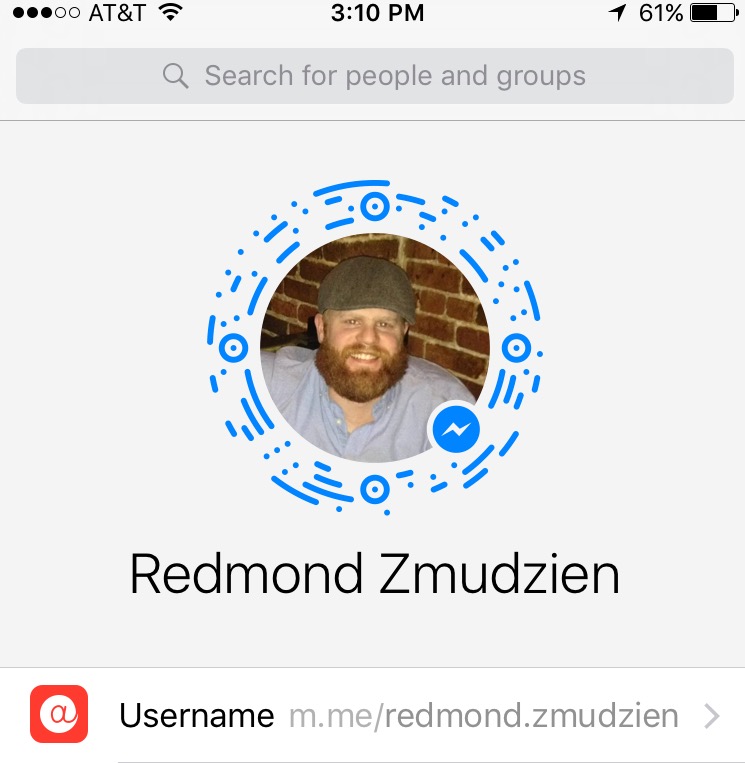
    Messenger Codes were announced and my first reaction was “QR Codes are BACK!” These are custom images unique to each Facebook business (and personal) page that, when scanned in the Messenger app will automatically open up a private message with the business page. This is a huge opportunity for engagement and customer service! Imagine the Messenger Code on the side of product packages? Get a package in the mail, but something’s not the right size? Scan the code that’s slapped on the side of the box and start having a conversation with return instructions from the business page directly in seconds. Messenger Codes may finally achieve what QR Codes so valiantly attempted in the past. These are available for download in your page’s message inbox now.

    FullSizeRender (5)

    Then there is also the recently introduced Messenger Links that use a page’s username to create a short link (think Bit.ly) that when clicked, automatically opens a private message within Messenger with the business. Try it out with your business, brand or personal page. The universal format is: m.me/PageName to get your own username.

    You can also encourage conversations by being quick to respond as a corresponding badge will appear on your page while helping establish response time guidelines. You may have seen these badges popping up on more and more Facebook pages recently. The requirements consist of responding to 90% of messages within 15 minutes to receive the badge and meet the threshold of “Very Responsive.” Just remember that this threshold is only for the previous 7 day period, so if you have done this one week, but then don’t the next week, you will lose your badge.

    Screen shot 2016-05-26 at 12.37.47 PM

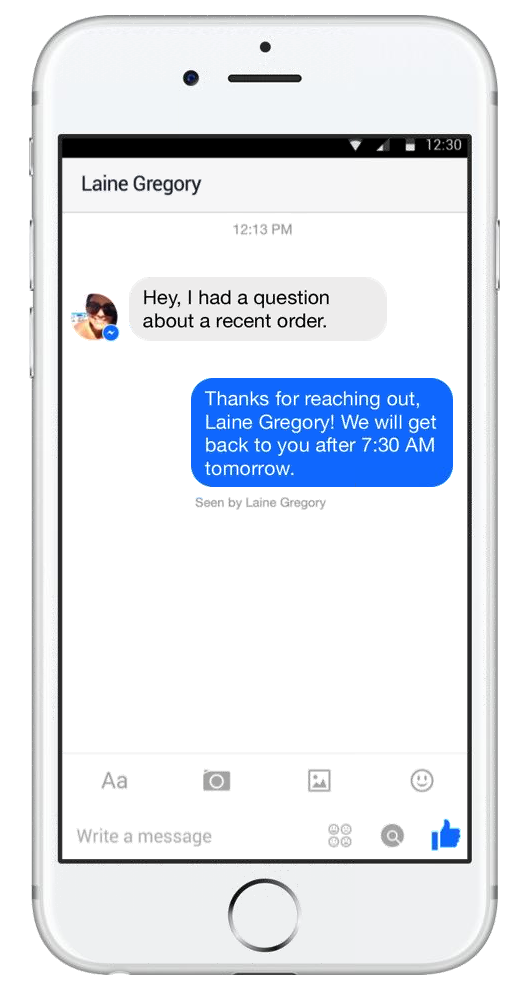
    You can also set an automatic greeting reply for when a user messages your page to set expectations and provide a link to some FAQ’s or anything else for people who start a conversation with you.

    Use the “Message” button to automatically open up a private conversation to respond to sensitive or private questions in a private message. This is a tool of unparalleled value for anyone who has ever been tasked with handling responding for a large company. Oftentimes best practices call for responding to a disgruntled customer in a private message so this helps take care of that, keeping the page drama free while also creating improved customer service.

    Screen shot 2016-05-26 at 12.40.24 PM

    You can also turn on Away Messages! Viva la AOL Instant Messenger! So if you’re away from the computer for a while or the business just won’t have anyone available to respond at certain hours just set this up and let your customers know exactly when you’ll get back to them. You can enable away messages even if you don’t have specific business hours too.

    Screen shot 2016-05-26 at 12.41.06 PM

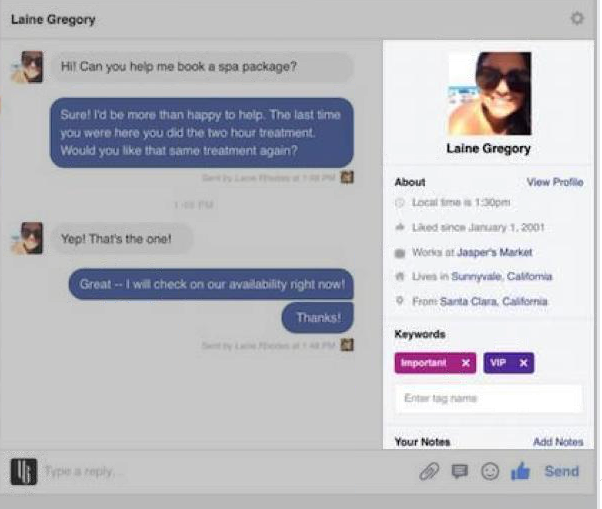
    Another cool feature are Context Cards within the message inbox, which are actually a snapshot, or a trading card if you will, of the person who messaged you. These Context Cards allow a business to get more personal info on users such as where they live, where they work etc. to provide a more personalized and custom message.

    Screen shot 2016-05-26 at 12.42.02 PM

    One thing to note for advertisers is that you can’t reach out to a customer unsolicited. So you can’t message a person who hasn’t reached out to you directly via messenger — yet. Facebook specifically said they will look into features like this in the future, but currently want to “empower customers to take the first step.” But once a person messages a page, then you can interact with them, send them special offers etc. all through Messenger.

    The best part is all of these new Facebook features are available globally right now!

  • Attack the Top of the Sales Funnel with Facebook Video

    attackthetopofthesalesfunnel

    Facebook rolls out new ad types all the time that allow advertisers to target users in unique ways or to reach different goals. Combining these various strategies into a few campaigns going through the longer sales funnel is one of the best ways to take advantage of all these ad types. This is what I like to call Attacking the Top of the Sales Funnel.

    Figure out who your key demo is for this campaign; who are you trying to hit? Is it men of a certain age in a certain radius? Moms with an interest in soccer? Whatever it is, set your targeting and run a Facebook video campaign.

    The beauty of Facebook video is you can sort out the users that are actually interested in your product based on who actually watched certain percentages of the video. Make sure to check off “Create audiences from people who view this video” under the designated Call To Action Button.

    Screen shot 2016-05-05 at 4.01.18 PM

    Doing this will allow Facebook to build a Custom Audience of users who have viewed your video. If your video gets 10,000 impressions, but only 5,000 users actually watch the video, then why would you want to waste ad spend on the 5,000 people that scrolled right past your content? Exactly, follow up with users who have already expressed an interest and given you their attention.

    Now it’s time to attack the top of the sales funnel. Using this Custom Audience you have created a perfect retargeting list to hit Facebook users with a follow up message or offer. This is particularly effective if the video is more of a brand awareness play and then retargeting users in the Custom Audience with a Carousel Ad with specific products/features.

    Finally, based on the results of your Carousel Ad determine which product or feature is getting the best engagement and most clicks from users? Then jump one level further down the funnel and closer to a conversion by serving up a specific offer or special to those users – based directly off which Carousel slide performed the best.

    Courtesy of Facebook for Business
    Courtesy of Facebook for Business

    This is a great tactic to increase efficiency of your ad spend. Rather than throwing videos, promo posts, website clicks ads etc. all out randomly and seeing what sticks, this allows you to methodically whittle down your audience size while also increasing the user attention, interest and the likelihood of ultimately making a purchase.

  • Facebook Bidding Strategies: Engagement vs CPM vs CPC

    As Facebook continues to develop new ad types, selecting the right bidding strategy for each becomes even more critical. This slight adjustment in bidding strategy, whether bidding for Engagement, CPM, CPC etc. will have a huge impact on ad performance. So instead of defaulting to running a Promoted Post simply because it reaches a large number of people, it’s important to identify what the goals of an ad campaign are and act accordingly.

    A lot of times people will run Promoted Posts for sale offers and simply bid on Post Engagement (it’s the default option), which will optimize ad delivery for people most likely to engage with the post. The only problem is that this doesn’t necessarily correlate with sales as it will optimize to display ads to users most likely to comment, like, share etc. Facebook reps describe these as “clicky” users, who are more likely to comment, like or share, but not necessarily hit your website and make a purchase.


    Below are a few quick tips for your Facebook ad campaigns, depending on the goal of the ad:

    Goal: Reach a large number of users and drive Impressions

    Ad Type: Promoted Post

    Bid Strategy: CPM or Daily Unique Reach/Reach & Frequency (if you’re concerned with delivery/frequency) to blast the ad out


    Goal: Clicks to a Website

    Ad Type: Website Clicks

    Bid Strategy: CPC ­ optimized for Link Clicks

    *Note: If the audience size isn’t that large you can bid on CPC and optimize for Impressions, but Link Clicks will be the most effective way of driving results if applicable.


    ”Engagement doesn’t necessarily correlate to sales anymore.”

    • As with most things, take this with a grain of salt, but the underlying point here is that bidding on Post Engagement may not be the most effective way to drive sales. Think of it this way, if bidding on engagement you’re telling Facebook to bid on users most likely to like, comment and share where in the end what you ultimately want is people to go to the website and convert/make a purchase instead. So a Website Clicks campaign makes more sense for specific sales/offers.
      Using the Best Bid Strategy w/ Each Ad Objective
    • A Promoted Post bidding on Post Engagement would be more effective bidding for CPM if your goal is brand awareness/getting the ad in front of as many people as possible, not necessarily bidding for users who will engage on the post itself.
    • Promoted posts probably should not be used if the campaign goal is to get people to click through to the website, unless you are altering the bid strategy on that campaign to CPC (specifically Link Clicks)
    • “90% of offline sales come from people who don’t interact with the ads (likes, comments etc.)”
    • *Note: If you’re still using the old Facebook conversion tracking code, the best practice is to place the new Facebook pixel on the client website and give it 30 days to build data before switching from the old code to the new pixel.


  • Reporting Facebook Conversions (Accurately)

    Confused by your conversion data on Facebook? Seeing data trickle in or maybe conversions are missing from your insights? Facebook reports all conversions as a “Conversion,” whether it’s a View Through Conversion or a Direct Conversion; Facebook does not differentiate like Google does. So that’s why it’s important to set the “Attribution Window” appropriately and leave yourself the right amount of time if trying to match up conversions with Google Analytics or a client’s CRM data. 

    How Facebook Defines Conversions:

    Facebook bundles everything into the one “Conversion” metric. The default attribution model is this:

    – User Viewed Ad and Converted Within 1 Day

    – User Clicked Ad and Converted Within 28 Days

    To adjust this, go to your Ads Manager, click on “Columns” and select “Customize Columns.”

    Facebook Customize Columns


    In the bottom right hand side of this menu you will see what the Attribution Window is currently set to with the option to adjust it.

    Facebook Attribution Window


    Set your Attribution Window appropriately, give the campaigns the same amount of time to sync up with your Analytics or client back-end system and your reporting headaches should be gone!

  • Understanding the Facebook Pixel

    The Facebook Pixel has helped bridge the gap in attribution for any business running certain ad types on Facebook. Taking advantage of the Pixel will allow you to track conversions, create remarketing campaigns and track how various audiences are interacting with your site. It’s important to install the Facebook Pixel sooner than later as the old Facebook conversion tracking codes will be getting deactivated by Facebook in the second half of 2016 so it’s necessary to have all clients over to the new Facebook pixel by the summer of 2016.

    The Basics

    • The “Standard Objectives” that can be set in the pixel (Lead, Complete Registration etc.) are the 9 most requested actions.
    • Pixel improves cross-device tracking based on the user’s Facebook identity across desktop and mobile
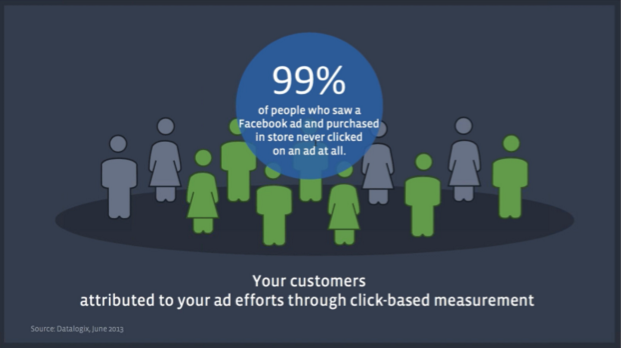
    • 99% of people who saw a Facebook ad and purchased in-store never clicked on an ad at all.


    Facebook_Pixel1

    Difference in Conversion Tracking Options

    • Standard Events: These are best when you want to pass back data (which action was performed on the site), when utilizing dynamic product ads and dynamic values for products, and ideal when access to the website’s back-end code is available.
      • Standard Events tracking is a stronger method of tracking conversions than Custom Conversion, so use this before Custom Conversions when possible.
        • In Page Event Tracking — Used when a person submits a form but a new page URL doesn’t load. “Standard events are going to be the best way to track that event if there is no specific URL you can use to create a rule.”
    • Custom Conversions: The best advantage of Custom Conversions are that they don’t need to have additional code added to the client’s website (other than the standard Facebook pixel), and allows for tracking of up to 20 separate conversions. This is great for when access to the client’s website back-end is unavailable. Custom Conversions can also be used to track users through the conversion funnel using the specific landing page URLs.
      • For example if you have your Facebook pixel placed on a client’s website and then in the future need to change conversion parameters or add new conversions, this allows you to track this by creating Custom Conversions which use the main Facebook Pixel and track based on the URL or a piece of the URL (i.e. Thank You page) as well as the category (ie. “purchase”). “It is a simple way to define new types of conversions.”


    Examples of Uses for the Pixel

    • A college website wants to drive leads for people that wanted more info specifically on getting a Master’s Degree. Create a parameter that is a “Content Type” for the Master’s option, so that will say to Facebook this is a specific event (Master’s Degree) and allow Facebook to segment out this info specifically rather than tracking all leads as one conversion.
    • Add Standard Event tracking to a specific button on the website, which is great for a form fill or a client that doesn’t have a Thank You page to support conversion tracking. This involves a bit of a workaround, which is broken down in the Facebook Developers How To.


    How to Make Sure the Facebook Pixel is Live

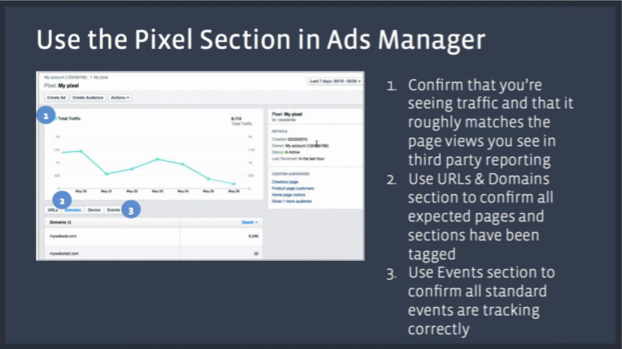
    • To double check if a Facebook Pixel is working, there is a tool called the Facebook Pixel Helper that is a Google Chrome widget, which can be used to check to see if there are any pixels on a specific page and if it is working. This is a widget I use all the time to check in on code installations quickly and easily, definitely recommend it.

    Facebook_Pixel2

    Cross Device Conversions

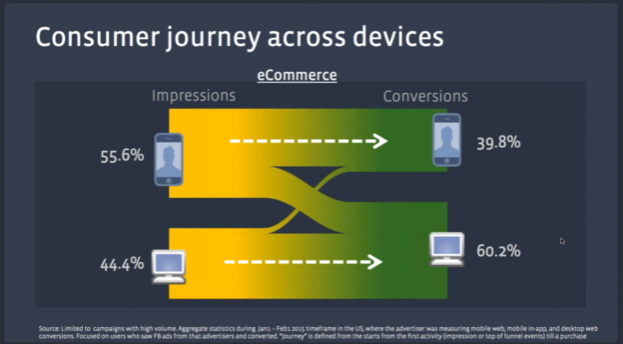
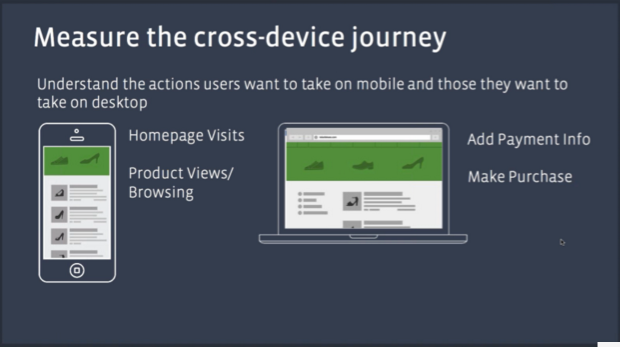
    • A great experiment to run is to explore running mobile specific campaigns aimed at getting people to your website/driving brand awareness and running desktop specific campaigns aimed at driving people to pages for adding payment info and completing conversions.
      • Go into cross-device reports to see how much traffic and how many conversions are coming from which devices and go from there.

    Facebook_Pixel3

    Facebook_Pixel4


    Taking Advantage of the Purchase Funnel (when available)

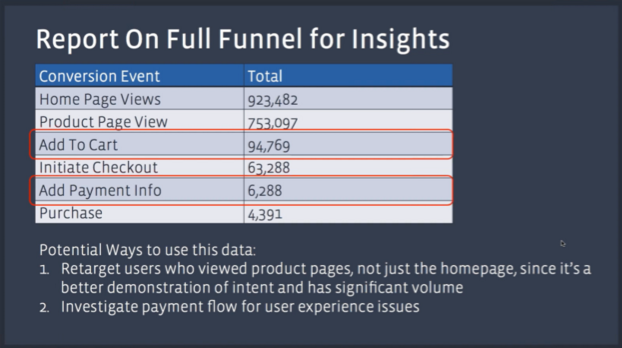
    • Move Optimization Event Up the Funnel — Rather than giving Facebook, say 200 pieces of data from final conversions to optimize a campaign, try moving the Optimization Event up to the initial checkout page where Facebook will now have, say 2,000 pieces of data to optimize for.

    Facebook_Pixel5

    Facebook_Pixel6

    Segment Audiences Based on Site Usage

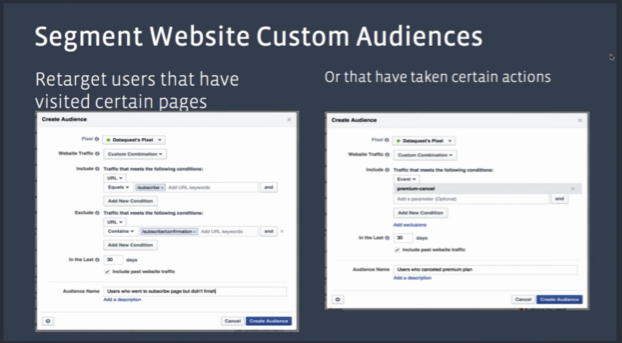
    • Segment Audiences based on how users interact with a website using 2 main options:
      • How Interested Are They and How Long Ago Did They Visit?
        • Someone who visited the website 1 day ago and did a search but did not add anything to their cart; try setting up a basic remarketing campaign, but if that audience doesn’t convert in another week or so they may not be worth it.
        • Someone who visited the website 7 days ago and made a high value purchase; create a Lookalike Audience of these users while also remarketing with additional complimentary products/items.
        • Someone who visited 30 days ago and is a member but has not returned, hit them with a re-engagement message (specific offer, promotion etc.), but they may be more likely to lapse as a customer.

    Facebook_Pixel7

    Facebook_Pixel8

    Graphics and stats courtesy of Facebook. For a deeper dive, you can watch the Facebook Pixel Webinar here.